
Field Journal · The place
What is a wrack line? Reading the shore after the tide
A narrow line of seaweed, grass and weathered wood can change the way you look at an entire beach.
The easiest thing to notice on a beach is the horizon. It gives the eye somewhere to settle: water, sky, a long clean edge. Look down, though, and another line comes into view. It is uneven and sometimes barely there. A strand of grass catches against a piece of wood. Seaweed gathers in a loose seam. Small fragments interrupt the open sand.
This is a wrack line: the place where the water has deposited natural material along the shore. Wrack can include washed-up seaweed, seagrass and other organic matter. The mixture depends on the surrounding coast and what the water carries. The Florida Fish and Wildlife Conservation Commission explains the role of beach wrack as a source of nutrients and shelter within the beach community.
For a visitor, learning the name makes a familiar scene more legible. The beach has another feature to follow, and the walk has a different pace. You begin looking at what has gathered, how the pieces overlap, and where the line disappears into the sand.
A small place with a busy food web
Wrack is part of the beach's working life. Small invertebrates live and feed among the material, and birds find food there in turn. In its account of the beach ecosystem, the National Park Service describes amphipods, flies and shorebirds linked through the wrack. That quiet strip connects life in the water with life above the tide.
The same account explains how wrack and driftwood can catch windblown sand, helping the beginnings of dunes take hold. A loose pile may look temporary while still contributing to something larger. It is a useful reminder to look at the beach in layers: the moving water, the material it leaves, the small animals using it, and the sand gathering around it.
You do not need to identify every plant or bird for the view to become richer. Watch from a distance. Notice where birds pause and where they move on. Let a patch remain a patch if you cannot name it. Curiosity can begin with seeing a relationship.
How to look without disturbing it
Begin by standing back. Give feeding and resting birds room, respect posted closures, and follow the particular beach's pet rules. The U.S. Fish and Wildlife Service explains why shorebirds need space: disturbance can interrupt feeding and rest, and take adults away from eggs or chicks. A photograph is better made with patience and distance than by making birds move.
Leave natural wrack in place. The Florida wildlife agency distinguishes keeping natural material on the beach from removing human-made debris. If you pick up ordinary litter, avoid disturbing wildlife or pulling apart the surrounding habitat, and follow local guidance. Posted rules and conditions at the beach you are visiting take priority over a general guide.
For a closer look, use your eyes rather than your hands. Look for the curve of a strand, the grain of weathered wood, or the contrast between damp material and pale sand. A quick note or a photograph from the public access area can hold those details without carrying anything away.
A line carried into the drawing
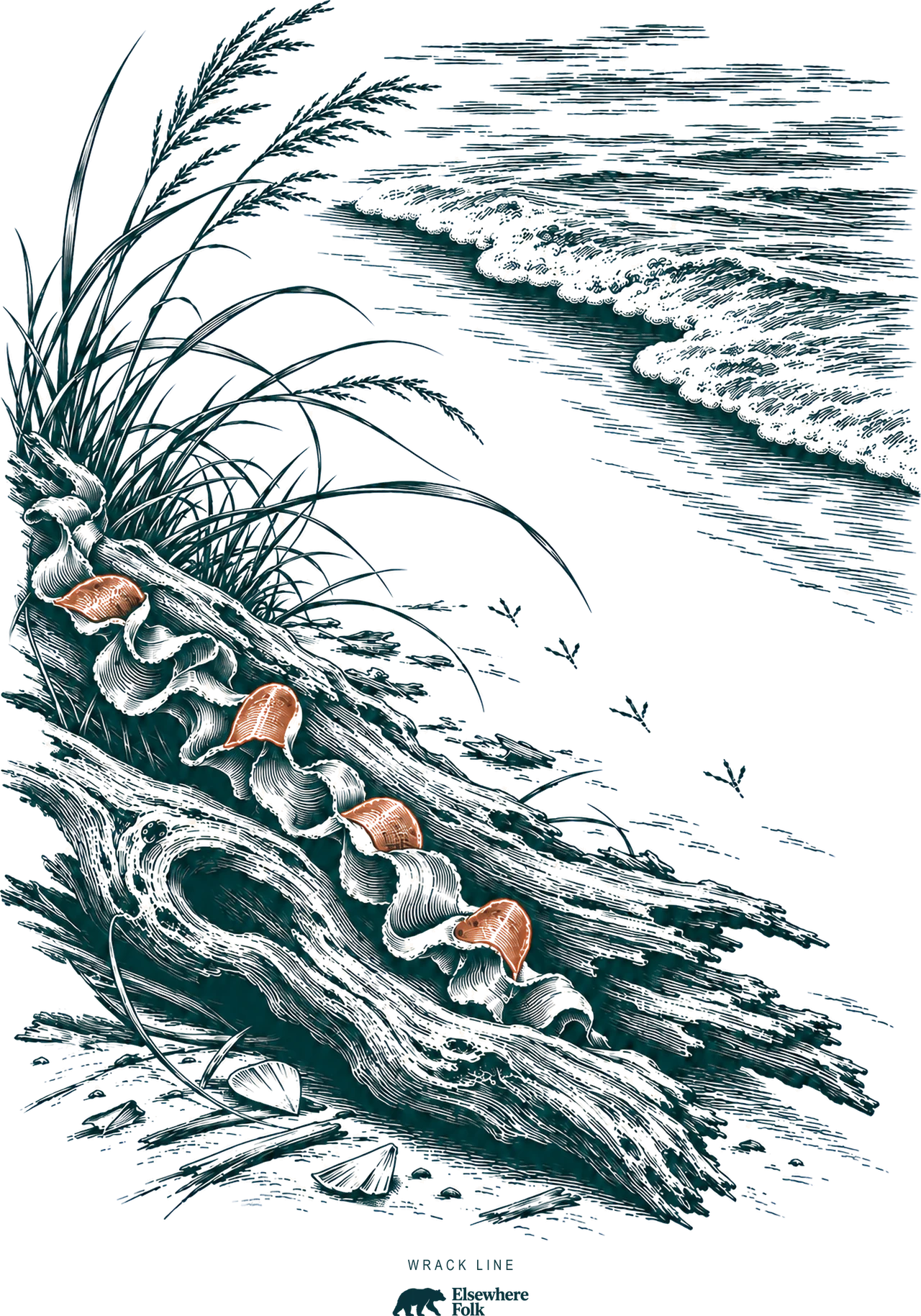
Our Wrack Line illustration begins with that change in attention. A diagonal piece of driftwood gives the composition its weight. Grass and small rust-colored forms gather along it; open space lets the eye travel toward the water. The little tracks are easy to miss on a first look. The complete drawing rewards a second one.
That is the thread running through our Lowcountry chapter: taking a particular detail seriously enough to let it lead. A creek can organize a whole scene. A narrow seam on a beach can become the subject. The place stays recognizable through the relationship between marks and the space left around them.
The next time you return to the shore, try following the smaller line for a while. Look at what holds your attention before looking toward the horizon again. The water will still be there. You may simply notice more of the beach between you and it.
A little further
Keep looking
Small stories from the places we return to. Join the Field Journal for one or two letters a month, or follow by RSS.
Natural-history sources are linked where they inform the story. Beach access, pet rules and wildlife closures vary; follow the current guidance at the place you visit.